A defined local repair
A limited failure in a dry, sound assembly may be repaired without replacing the surrounding roof. Compatibility, preparation and the connection to adjoining material determine the repair method.
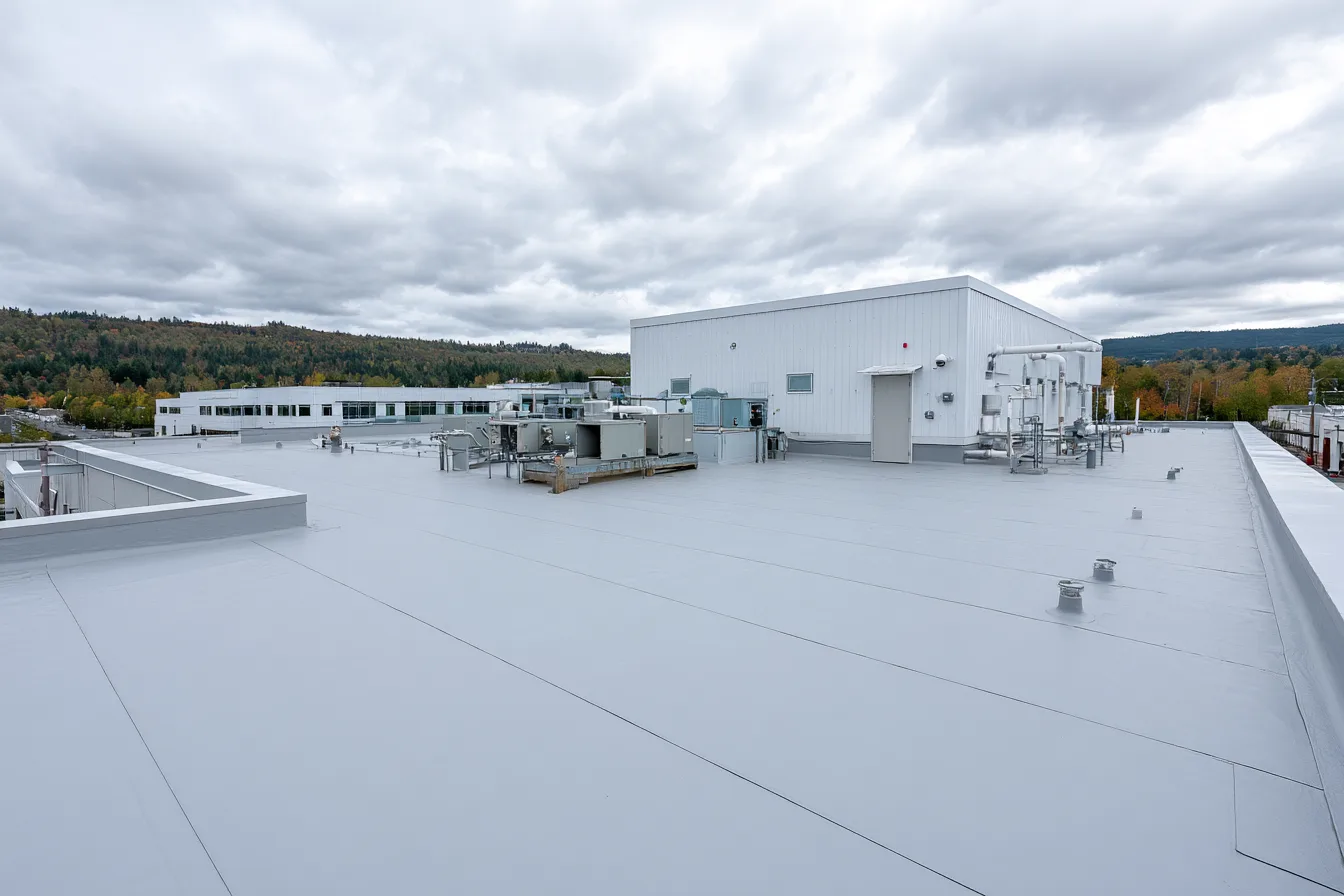
A low-slope roof leak needs a repair that fits its membrane and the layers below. Get help with seams, curbs, drainage and recurring leaks at your Farmers Branch commercial property.
Water above a ceiling tile or work area can interrupt the building before the roof looks badly damaged. On a low-slope assembly, it may travel between layers or along the deck before becoming visible inside. The leak location helps start the inspection, but the repair still needs to find the entry point.
A seam, puncture, curb, wall termination or drain can require a different repair. The existing membrane and previous patch materials need to be identified so new work can make a compatible connection. A familiar-looking white surface does not establish the product or the repair method.
The assessment also needs to establish whether the leak has affected insulation or supporting material. A surface patch may close an opening while leaving damaged layers in service if that question is skipped.
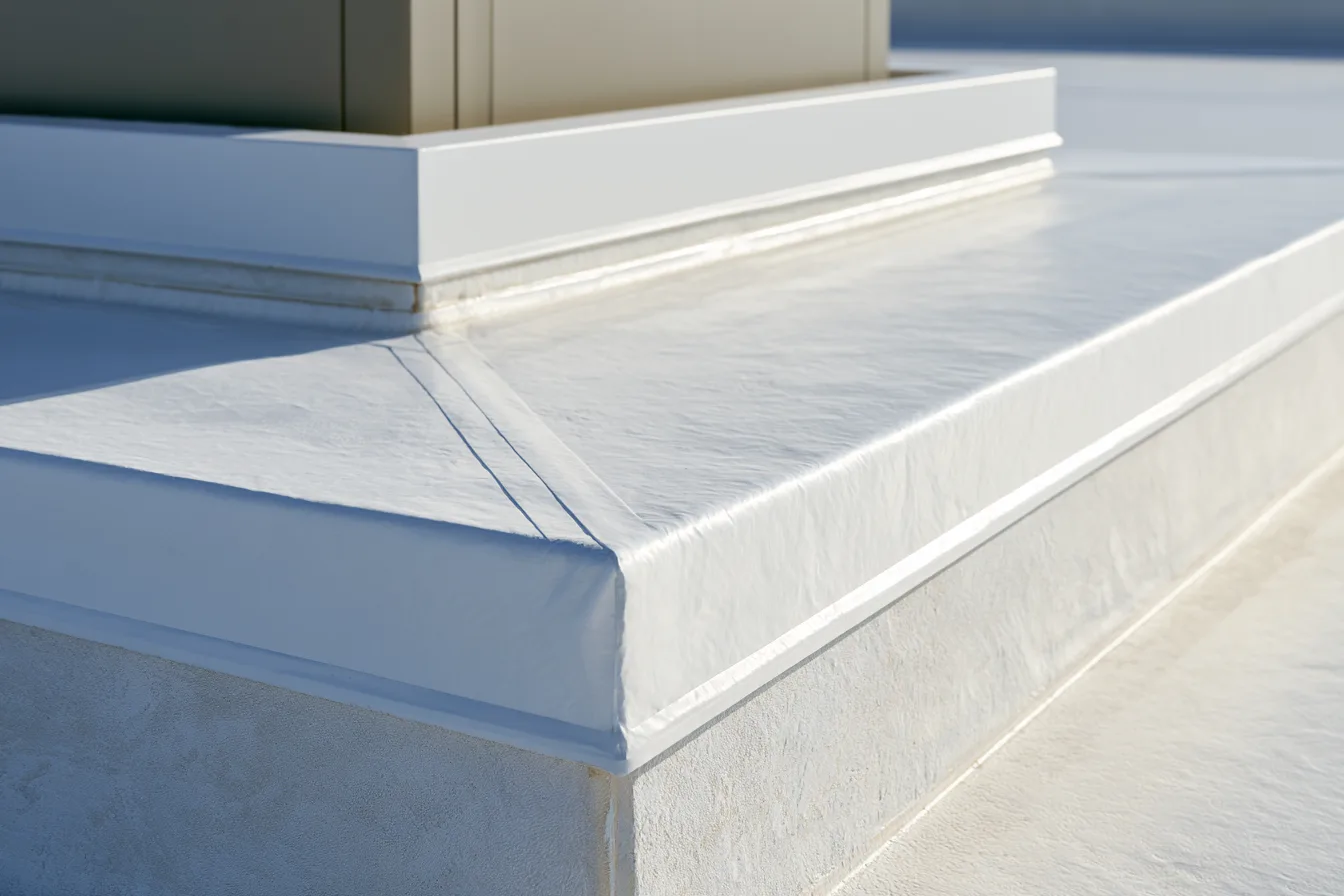
A useful repair follows the failed detail through the roof assembly. A puncture in otherwise sound membrane may have a limited boundary. An opening around a curb may involve corners, vertical flashing and the upper termination as well as the field membrane.
Different roof systems need different joining methods. The repair material must work with the existing substrate and any prior coating or patch. Where wet insulation or deteriorated material is found, the scope should explain what must be removed and how the repaired area connects to the sound roof around it.
Open laps, damage or punctures that need a sound compatible connection.
The corners, flashing and terminations around roof openings.
Places where water exits or the membrane terminates.
Moisture and damaged material that a surface-only patch would leave behind.
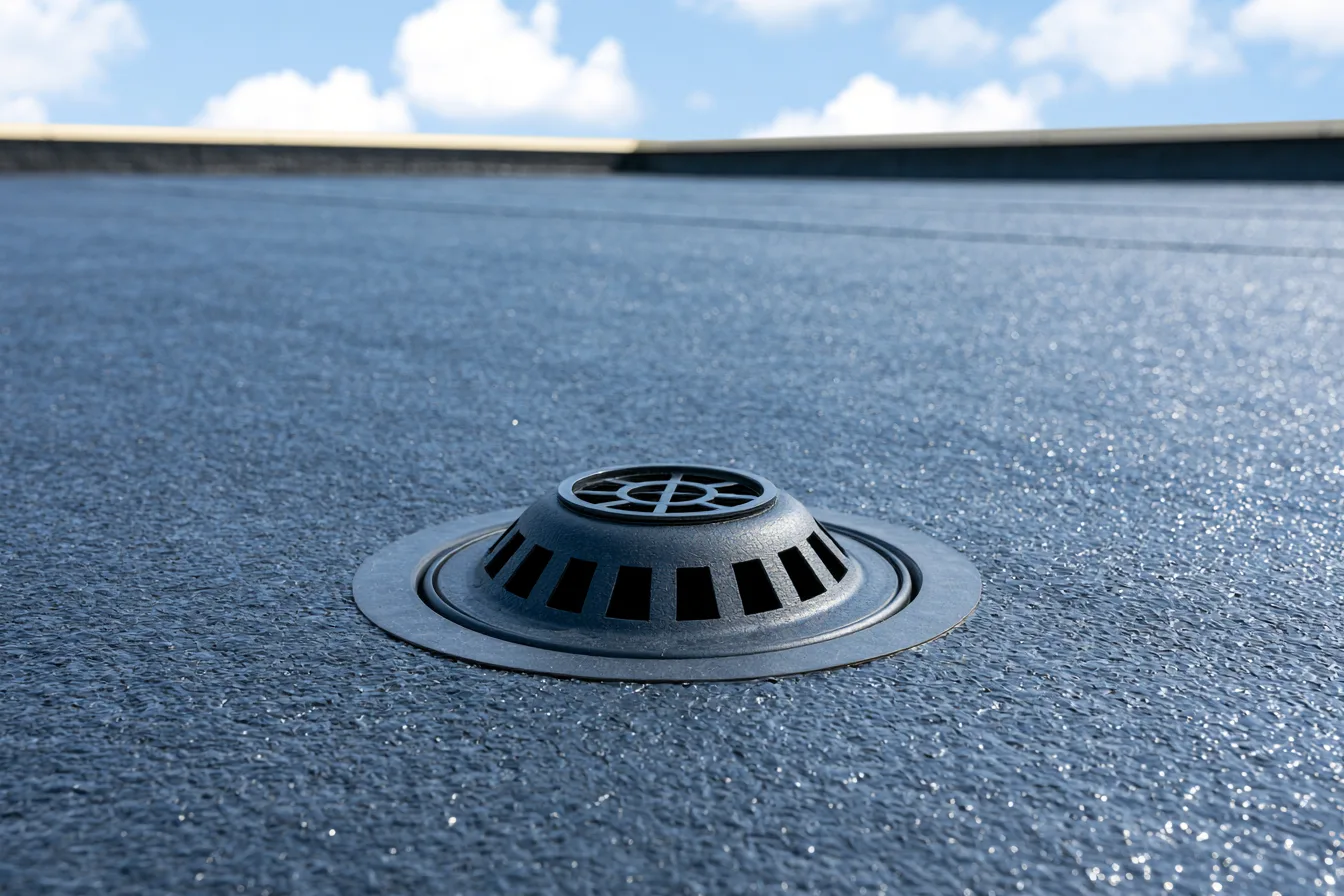
A flat roof still needs a path for water to leave. Debris at an outlet can block that path, while a low spot, deflection or poorly arranged drain can hold water even after the outlet is clear. Those conditions require different work.
Repairing a membrane opening does not change the slope beneath it. If water repeatedly gathers at the same location, the roofer needs to consider the outlet, surrounding falls and the assembly before proposing another patch. Drainage improvements may need a broader scope than the local membrane repair.
Drain guards and equipment access also belong in maintenance planning. Keeping drainage routes usable helps preserve completed work, while regular service traffic needs a route that does not damage the roof it crosses.
A limited failure in a dry, sound assembly may be repaired without replacing the surrounding roof. Compatibility, preparation and the connection to adjoining material determine the repair method.
Repeated leaks, extensive wet areas or deteriorated attachment can indicate that the roof needs a broader plan. The comparison should identify the remaining useful roof, the work that keeps recurring and the condition a new system would address.
A repair scope should be practical for the occupied building as well as correct for the roof.
Share the affected area and any restrictions on using it. Keep people away from damaged ceilings or electrical hazards, and coordinate roof access around the building’s operations.
The area opened for repair must suit the conditions and the work that can be made secure. Temporary protection, if needed, remains a separate holding measure rather than the finished repair.
Rooftop equipment may need access during or after the roofing work. Identify the relevant service connections and protect the repaired area from avoidable traffic.
The scope explains the repair boundary and any drainage or maintenance work needed to help protect it.
The cause can be a blocked outlet, a low spot, inadequate fall or movement in the structure. The solution depends on the cause. The membrane itself does not determine whether the roof drains properly.
Yes. Incompatible compounds, coatings or poorly bonded patches may need to be removed or accounted for before a reliable new connection can be made. Material identification is part of the repair decision.
Equipment penetrations, curb flashings and service traffic can affect the roof, while equipment drainage can also create an interior water issue. The inspection should distinguish those paths rather than assume every wet ceiling starts in the membrane.
No. The extent of damage, moisture and adjoining condition determine whether a defined repair is useful. Replacement becomes a consideration when the underlying problem extends beyond a workable local boundary.
Temporary measures may be appropriate when access and conditions allow. They need a clear next step toward permanent work and should not be treated as proof that the assembly below is dry or sound.
Tell us where water appears, how the building is used and what previous repairs you know about. Request a free commercial roof inspection.